National Alopecia Foundation for People of Color
Changing the Future of Hair Loss Through Education, Research & Advocacy
Advancing Hair Health Equity for Every Community.
NAFPOC is dedicated to improving awareness, education, support, and research for hair loss conditions that affect underserved communities — while welcoming everyone seeking answers and hope.
80M+
Americans experience some form of hair loss
1 in 3
Black women experience some form of scarring hair loss
< 1%
of dermatology research funding targets hair loss in skin of color
4+ yrs
average delay between first symptom and accurate diagnosis
Why NAFPOC Matters
More than 80 million Americans experience hair loss. Far fewer get real answers.
Hair loss affects millions of people, yet many conditions remain misunderstood, underdiagnosed or overlooked. NAFPOC was established to change that.
80M+
A national scale
More than 80 million Americans experience hair loss, across every race, ethnicity, age and background.
Years
Delayed recognition
Many people live with change for years before anyone names it — and for scarring conditions, time is the thing that cannot be recovered.
Daily
Misinformation
Reliable, plain-language education is still hard to find, so guesswork and marketing fill the gap.
Real
Emotional weight
Hair loss carries genuine distress. Support and understanding are part of care, not an afterthought.
We are committed to increasing public awareness, supporting research, educating healthcare and beauty professionals, empowering patients, and advocating for greater recognition of hair loss as an important health issue deserving national attention.
Our work extends beyond one community. Everyone deserves access to trusted information, compassionate support, and hope.
Our Mission
Hair Loss Deserves Answers. Silence Is Not a Solution.
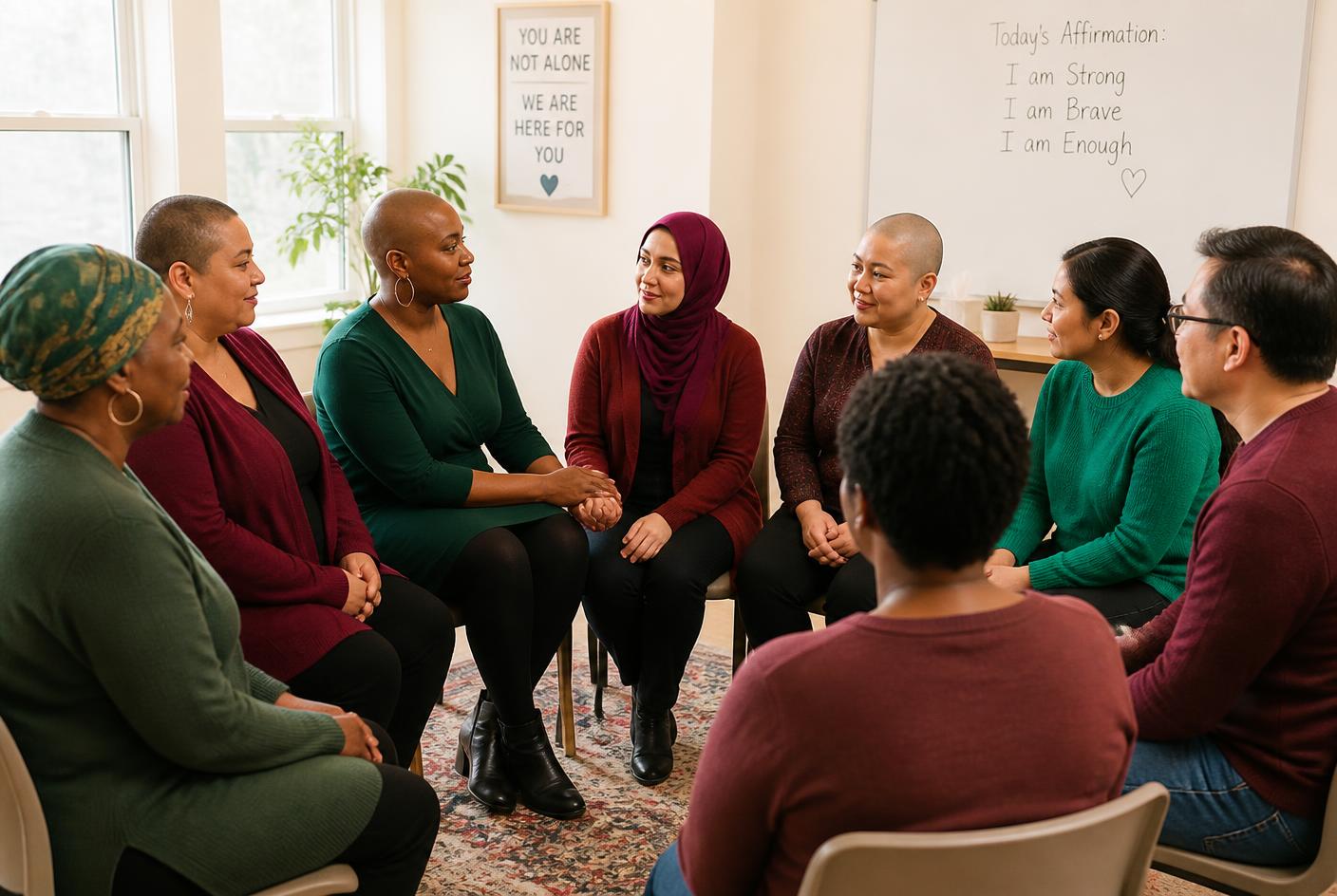
NAFPOC was founded because too many people live with unanswered questions, delayed recognition, misinformation, and unequal access to trusted hair health education. While many communities of color have historically experienced significant disparities in awareness, research, and access to culturally informed resources, our mission has grown to serve every community affected by hair loss.
We believe every person deserves timely education, compassionate support, evidence-informed resources, and hope. Through education, research, advocacy, and community partnerships, NAFPOC is working to create a future where no one faces hair loss feeling invisible, unheard, or alone.
Educate
Deliver trusted, easy-to-understand hair and scalp health education.
Research
Advance and support research that improves understanding and outcomes for all communities.
Advocate
Raise awareness and champion equitable access to hair health resources and recognition.
Support
Connect individuals and families with education, community, and hope.
Conditions We Support
Fifteen conditions. One community.
Plain-language education for the hair loss conditions we see most — and the communities most often left out of the research.
Scarring & Inflammatory
CCCA
Central Centrifugal Cicatricial Alopecia
A scarring alopecia that begins at the crown and spreads outward, disproportionately affecting Black women. Early recognition can preserve follicles that would otherwise be permanently lost.
Scarring & Inflammatory
Traction Alopecia
Tension-related hair loss
Caused by sustained pulling from braids, weaves, locs, extensions and tight styles. It is largely preventable — and reversible when addressed before scarring sets in.
Patterned & Diffuse
Alopecia Areata
Autoimmune patchy hair loss
An autoimmune condition producing round patches of loss on the scalp, beard, brows or body, sometimes progressing to totalis or universalis. Emotional support matters as much as treatment.
Scarring & Inflammatory
Frontal Fibrosing Alopecia
Receding scarring hairline
A scarring alopecia that pushes back the frontal hairline and thins the eyebrows, most often in women after midlife. Under-diagnosed across skin of color.
Patterned & Diffuse
Androgenetic Alopecia
Pattern hair loss
The most common form of hair loss worldwide, driven by genetics and hormones. Presentation differs across textures and ethnicities, which changes how it should be evaluated.
Scarring & Inflammatory
Scarring Alopecias
Cicatricial alopecias
A family of inflammatory conditions — lichen planopilaris, folliculitis decalvans, dissecting cellulitis and more — where follicles are replaced by scar tissue. Time is follicle.
Patterned & Diffuse
Telogen Effluvium
Stress and illness shedding
Diffuse shedding two to four months after childbirth, illness, surgery, grief or nutritional shifts. Usually temporary, but it deserves a real workup rather than reassurance alone.
Community & Life Stage
Pediatric Hair Loss
Children and adolescents
Tinea capitis, early traction, trichotillomania and alopecia areata in children — with school, bullying and identity considerations families should never navigate alone.
Community & Life Stage
Hair Loss After Cancer
Treatment-related and persistent
Chemotherapy, radiation and endocrine therapy can cause temporary or persistent alopecia. Survivorship care should include a plan for regrowth and appearance.
Find Your Path
However you arrived here, there is a way to engage.
Patients & Families
Understand your condition, find a specialist who knows textured hair, and connect with people who get it.
Get supportHealthcare Professionals
Clinical summaries, patient handouts and continuing education on hair loss across skin of color.
Education CenterResearchers
Grants, a patient registry and university collaborations designed to close the evidence gap.
Research initiativeDonors & Partners
Fund scholarships, research and free community programming through corporate and individual giving.
Become a sponsorResearch Initiative
Funding the studies that were never funded.
Fewer than one percent of dermatologic research dollars address hair loss in skin of color. NAFPOC is building the infrastructure to change that — grants, a national patient registry, and university partnerships.
Research Grants
Patient Registry
Community Surveys
Scholarships
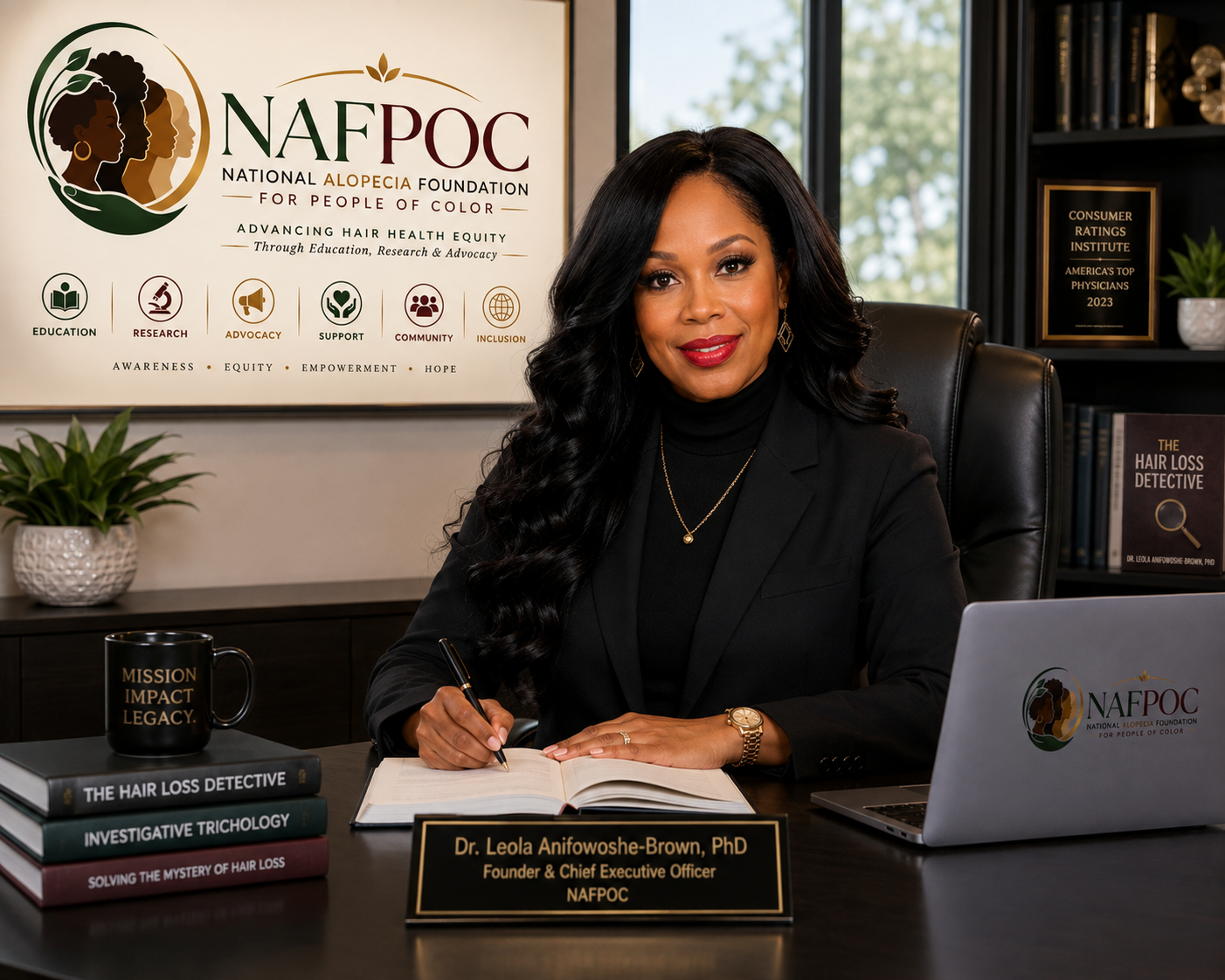
Meet Our Founder
The vision behind NAFPOC
Dr. Leola Anifowoshe-Brown, PhD — Founder • Chief Executive Officer • Internationally Trained Trichologist • Author • Educator • Research Advocate.
For more than two decades she has helped people understand one of the most emotionally devastating conditions a person can experience. As founder of Texas Hair Restoration & Wellness Center, creator of Investigative Trichology®, and nationally recognized as The Hair Loss Detective™, she saw the same pattern too many times — and realized the problem was far larger than any one clinic could solve.
Get Involved